
Tirzepatide, the active ingredient in Mounjaro and Zepbound, is a peptide-based medication, and peptides are notoriously sensitive to heat, light, and time. If you've just picked up a new prescription or you're planning a trip and wondering whether your pen will survive the cooler, the good news is that tirzepatide is fairly forgiving as long as you understand a few basic rules. Here's what actually determines how long it lasts, and how to make sure yours stays effective until you need it.
The Short Answer
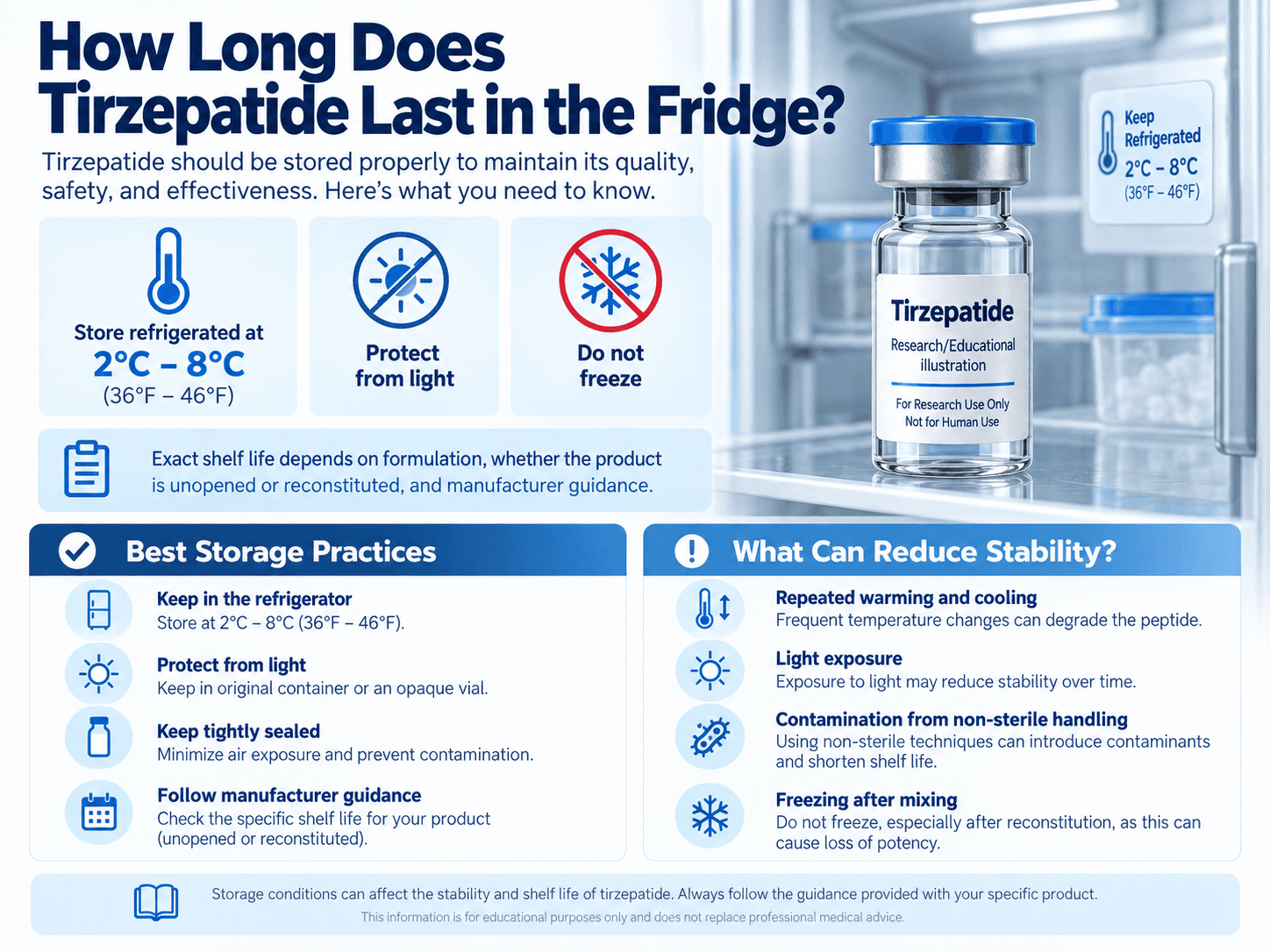
When stored properly in the refrigerator, at a temperature between 36°F and 46°F (2°C to 8°C), tirzepatide remains stable through the expiration date printed on the pen or vial. That date typically falls two to three years from the manufacture date, so an unopened, continuously refrigerated pen has a fairly long runway. Once a pen is removed from the fridge for use, the countdown changes, and that's where most of the confusion comes from.
Refrigerated vs. Room Temperature Storage
The refrigerator is the recommended home for tirzepatide, but it isn't the only place it can survive. If you leave a pen out of the fridge, at room temperature below 86°F (30°C), it's generally considered stable for up to 21 days. This flexibility exists specifically for situations like travel or a power outage, not as a routine storage method. Once a pen has spent time at room temperature, it should not be returned to the refrigerator afterward; instead, that 21-day room-temperature clock becomes the deadline for using it.
It's also worth noting that many people find it more comfortable to inject medication that isn't ice-cold straight from the fridge. Taking a pen out roughly 30 minutes before your dose is a common practice and doesn't compromise the medication, as long as the total room-temperature exposure stays well within that 21-day window.
What Actually Shortens Shelf Life
Three things degrade tirzepatide faster than intended: heat, light, and freezing. Peptides are chains of amino acids held together by relatively fragile bonds, and excessive warmth or prolonged light exposure can cause those chains to break down or clump together, reducing potency. Freezing is just as damaging in the opposite direction; ice crystals can physically disrupt the peptide structure, which is why tirzepatide should never be placed in the freezer or stored against the back wall of a fridge where freezing sometimes occurs. Keeping the pen in its original carton until you're ready to use it protects it from light and serves as a visual reminder of the printed expiration date.
A Note on 90-Day Supplies
If your prescription arrives as a 90-day supply, refrigerate the entire carton as soon as it arrives rather than leaving extra pens out on the counter. Remove only the single pen you plan to use for that week's dose, and leave the rest refrigerated until their turn comes. This minimizes unnecessary room-temperature exposure and helps ensure that every pen in the box is still fully potent by the time you get to it.
Compounded Tirzepatide: A Different Timeline
It's important to distinguish FDA-approved tirzepatide (Mounjaro and Zepbound) from compounded tirzepatide prepared by a compounding pharmacy. Compounded formulations don't carry the same multi-year stability data as the branded products. Once reconstituted or opened, compounded tirzepatide vials are typically considered stable for only about 28 to 30 days in the refrigerator, a much shorter window than the years-long shelf life of a sealed, brand-name pen. If you're using a compounded product, the pharmacy that prepared it is the best source for exact storage and expiration guidance, since formulations and preservatives can vary between providers.
Traveling With Tirzepatide
If you're flying, pack tirzepatide in your carry-on rather than checked luggage, both to keep it within the recommended temperature range and to avoid the risk of lost baggage. An insulated travel case with a small ice pack (avoiding direct contact between the medication and the ice) can help maintain a safe temperature during transit. For road trips, keep the medication in the temperature-controlled cabin of the vehicle rather than the trunk, where temperatures can swing well outside the safe range depending on the season.
How to Tell If Your Tirzepatide Has Gone Bad
Before every injection, check the solution. It should be clear and colorless, without cloudiness, discoloration, or visible particles. If anything looks off, or if the pen has clearly been exposed to temperatures outside the safe range for longer than recommended, don't use it. When in doubt, it's always safer to contact your pharmacy or provider than to risk using a dose that may have lost potency.
The Bottom Line
Refrigerated at 36°F to 46°F, brand-name tirzepatide lasts until its printed expiration date, generally two to three years from manufacture. It can tolerate up to 21 days at room temperature if needed, but shouldn't go back in the fridge once it's been out. Compounded tirzepatide follows a much shorter timeline, typically around 28 to 30 days once opened, and should be confirmed with the compounding pharmacy directly. Keeping the medication in its original packaging, away from heat, light, and freezing temperatures, is the simplest way to make sure every dose delivers what it's supposed to.
If you have questions about your specific prescription or storage situation, a licensed provider through IRON Rx can review your treatment plan and give guidance tailored to your medication and circumstances.
Interested in treatment? Learn about tirzepatide injections at IRON RX, including pricing and how the online evaluation works.